Outdoor space behaves strangely. It expands, shrinks, shapeshifts — but mostly in the mind. A backyard can feel tiny on Monday and endless on Saturday if something about it changes. Not the land size, of course.
Nobody’s dragging property lines around. It’s the wood, the shade, the framing of space that shifts how people use it. And the funny part? Most homeowners assume they need bulldozers or blueprints stamped by someone in a very official vest before anything can “expand.”
They don’t. Custom woodwork can stretch the livable area without tearing anything down, without the chaos of major construction, without the “sorry, you can’t walk here for six weeks” tape running across the patio.
What follows isn’t theory. It’s how people actually reclaim their outdoor space when they’re tired of stepping outside and thinking… ugh, nothing to do here.
Why “More Space” Usually Isn’t About Square Footage at All
Most homeowners start with the belief that their backyard is simply too small or too plain to function well, and they instinctively assume the only solution is to build something larger — bigger patios, bigger additions, bigger structures in general.
Yet this idea tends to dissolve the moment someone steps into an outdoor area that hasn’t grown an inch yet feels twice as usable, and the difference lies not in size but in how the space is shaped.
Shade that softens harsh light, boundaries that calm visual clutter, a defined corner that suddenly feels like a destination rather than leftover ground — these small architectural cues change behavior without altering the yard’s physical dimensions.
Outdoor living improves when a space carries a sense of purpose, guiding people gently toward the parts of the yard that feel sheltered, balanced, or simply pleasant to linger in.
An undefined yard quietly repels use; a thoughtfully framed one draws people in and keeps them there.
This is where custom woodwork begins to show its value, not by expanding anything outward but by giving structure and clarity to areas that previously felt vague, transforming the yard into a place that supports daily life rather than a patch of ground people pass through without noticing.
1. Pergolas That Create a Room Without Walls
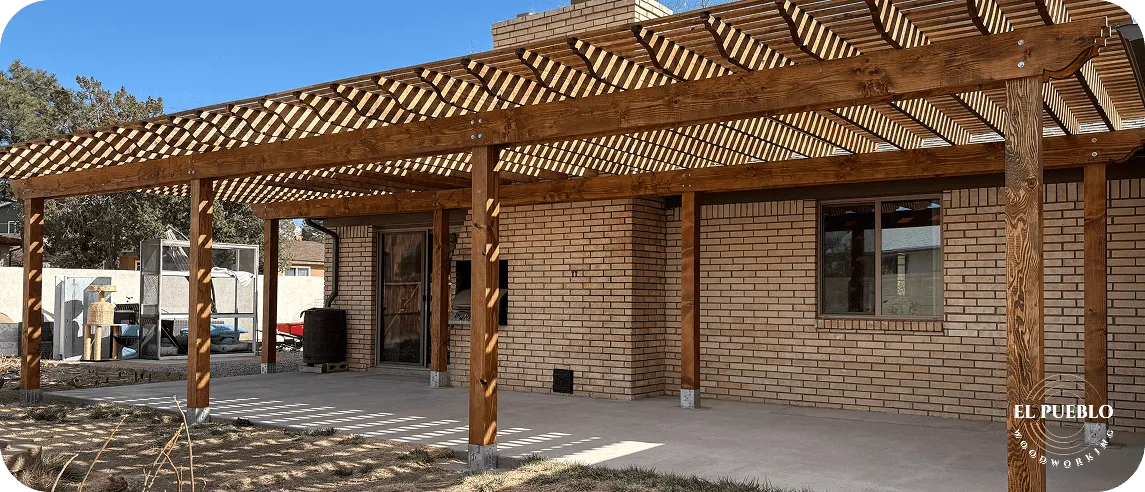
A pergola is deceptively simple — four posts and a skeleton of beams. But once it stands there, the backyard behaves differently. People sit longer. They drift toward the shade like it’s magnetic. They call it “the hangout spot,” even if yesterday the same patch of ground was just a sunburn waiting to happen.
There’s no major construction going on. A few anchor points, some thoughtful design, maybe a privacy slat or two. Done.
Pergolas make space feel “assigned,” and humans love assigned space more than they admit.
What’s interesting about pergolas:
- They create comfort zones where none existed.
- They visually divide the yard into usable sections.
- They offer just enough shade to make hot days survivable.
- They look intentional even when the yard is otherwise chaotic.
And later, homeowners catch themselves treating the pergola area like a living room — maybe a messy one, but a living room nonetheless.
2. Deck Platforms That Lift the Ground and Change Everything
A deck doesn’t need to stretch across the entire backyard to make a dent in how people experience space.
A small platform can shift the vibe so fast it’s almost comical. One minute you’ve got uneven dirt, the next a clean, inviting platform where drinks don’t tip over and chairs don’t dig into the soil like they’re trying to escape.
Decks fix problems people never articulate but constantly feel:
- No more chairs wobbling on weird ground;
- No muddy feet from walking across damp patches;
- No “where do we sit?” shuffle when guests show up;
- No awkward empty space that feels too open or too exposed.
A low deck creates a sense of intent. People behave differently in the woods. They linger. They relax. They treat it like a designated zone, even if it’s only six inches off the ground.
And because it’s custom woodwork, the deck can bend around obstacles, embrace a tree, or fill a corner everyone assumed was unusable. It’s like the yard gets mapped properly for the first time.
3. Shade Covers That Make Noon Feel Like a Time People Actually Use
Afternoons in Albuquerque aren’t gentle. The sun doesn’t simply warm; it dominates the entire yard, and without shade, large sections of outdoor space become areas people step into briefly before heading back inside.
A patio cover — not a room, not an extension, just a well-built wooden frame with a solid or semi-solid top — changes that dynamic immediately. Noon becomes usable again. People linger instead of retreating. Even cooler seasons feel different under a steady, sheltered span of wood.
And these covers do more than cast shade. They define edges, create orientation, and give structure to space that previously felt vague or exposed. With a single overhead element in place, the yard regains activities that had quietly disappeared:
- Sitting outside during bright hours without discomfort;
- Placing outdoor furniture without quick fading;
- Using the space for meals, reading, or work;
- Hosting guests without everyone clustering in one narrow shaded spot.
The shift in usability is significant for such a modest change. In climates shaped by strong sun and dry air, shade structures are often designed and installed by specialists who work with these conditions every day, such as El Pueblo Woodworking, whose projects account for New Mexico’s specific weather conditions when determining materials and structural layout.
4. Custom Gates, Screens, and Dividers That Turn Mess Into “Zones”
A backyard with no structure often feels like a parking lot: big, open, and weirdly uncomfortable. People stand around awkwardly because there’s no visual map telling them where to go.
Add a custom divider, gate, or privacy screen, and the place breaks into smaller, more intimate sections. That’s when outdoor space starts behaving like indoor space — with rooms, corners, pathways.
It doesn’t even take much. Some subtle additions that change everything:
- A wooden privacy screen behind the seating area;
- A partial gate separating the garden from the patio;
- A slatted divider that blocks wind but not the view;
- A short fence that suggests a boundary without shouting about it.
These pieces don’t require construction crews crawling around the yard. They’re quick, clean, almost surgical.
But the effect is massive: people gravitate toward the areas that feel enclosed or defined, even when the surrounding yard hasn’t changed one inch.
And this zoning effect — if done well — makes a small yard feel intentional, even artful.
5. Built-In Seating and Storage That Quietly Expands Functionality
Outdoor seating is usually an afterthought. Folding chairs, plastic loungers, and a table someone grabbed at a sale because it “looked fine.” And storage? A random plastic bin was shoved behind a bush.
But built-in seating changes the way people occupy a space. Wood benches hugging the edge of a patio. Corner seating integrated into a deck frame. Storage boxes that double as seating. Suddenly, the outdoor area supports more people, more activities, more everything — without taking up the extra square footage, loose furniture usually eats alive.
Built-in seating has this tidy, almost clever way of increasing hosting space without announcing it. Here are the shifts people notice:
- More places to sit without crowding the patio;
- Less clutter from scattered chairs;
- Hidden storage that keeps outdoor gear from becoming an eyesore;
- A cleaner layout that feels deliberately designed.
It’s the difference between a yard that looks thrown together and one that looks cared for.
And because it’s custom, the seating fits the yard instead of the yard bending around store-bought furniture that never truly belonged there.
So What’s Really Happening When You Add Custom Woodwork?
Outdoor space doesn’t physically expand when custom woodwork is added, but the way people experience it changes so noticeably that the area begins to feel broader, more comfortable, and far better organized.
Most homeowners judge their yards not by exact dimensions but by how inviting the space feels, how clearly its sections are defined, and how naturally they find themselves spending time outdoors rather than retreating inside.
Pergolas, deck platforms, shade covers, dividers, and built-in seating guide that shift in subtle ways, creating structure and comfort without the disruption of major construction.
Each element influences behavior differently — pergolas establish natural gathering points, decks provide clean and stable surfaces that make movement intuitive, covers soften the sun and extend usable hours, and dividers bring coherence to areas that once felt shapeless — and the combined effect is a yard that supports daily life rather than sitting unused.
The best woodwork doesn’t draw attention to itself; it quietly improves how people move, rest, and interact outside, until the backyard feels like a genuine extension of the home instead of a neglected stretch of ground.